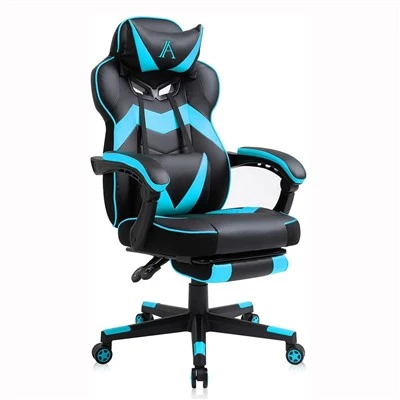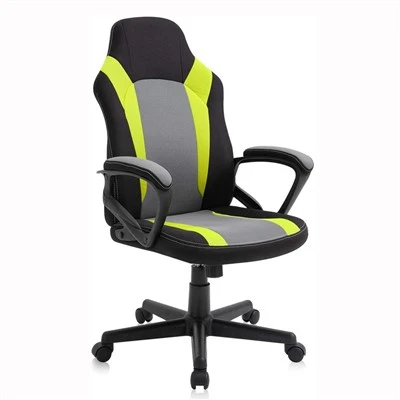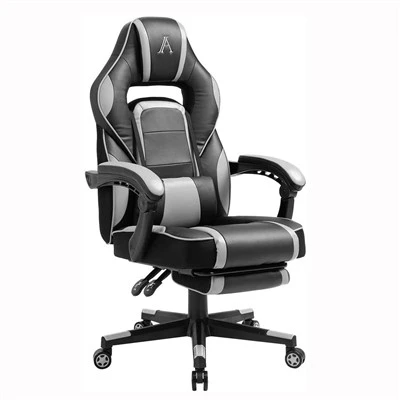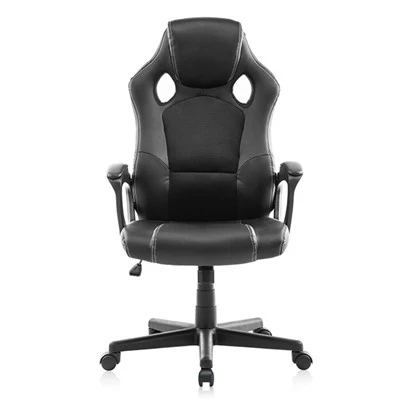
In the realm of office furniture, reclining office chairs have garnered increasing attention from users in recent years. When selecting such products, people often prioritize aesthetics or the mere presence of a "recline" function, frequently overlooking the factors that truly determine the user experience: the chair's structural design and material composition. A reclining chair's ability to maintain stable support during prolonged use and provide optimal pressure distribution across various sitting and reclining postures depends on its frame materials, hardware components, and overall structural logic, rather than just a simple functional label.
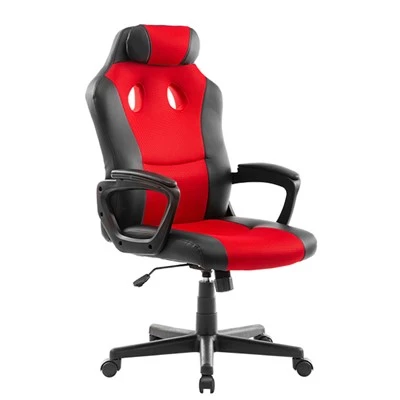
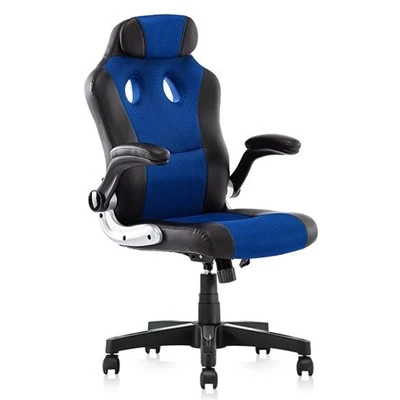
The core design philosophy of a reclining office chair lies in balancing support with freedom of movement. Take the Yijian Furniture SX-108 model, for instance; it utilizes a metal frame, a common structural choice for industrial-grade office chairs. The metal frame provides essential rigidity-crucial when the chair is reclined, as the backrest must withstand significant backward-tilting torque. The metal structure effectively resists deformation, ensuring overall stability. The inclusion of armrests is particularly significant in reclining scenarios; beyond supporting the arms, they help distribute upper-body pressure while reclined, thereby alleviating concentrated strain on the lower back. The chair does not feature swivel or folding capabilities, indicating a design focused on stability in a fixed location-ideal for office environments requiring extended periods of sitting or reclining. While the hardware is simply designated as "high-quality"-without specific material or standard details-in the office chair industry, hardware quality directly dictates the longevity and smoothness of adjustment mechanisms. Components such as the backrest tilt pivot and locking mechanism are critical points that determine the chair's long-term reliability.
Differences in the real-world performance of reclining chairs often stem from specific structural trade-offs. For example, the thickness of the metal frame and the quality of welding directly impact the chair's fatigue resistance during repeated reclining motions; insufficient strength at frame joints can lead to rattling noises or looseness over time. Armrest design also warrants attention: fixed armrests offer structural simplicity and low maintenance costs but fail to accommodate users of varying body types; conversely, adjustable armrests provide greater flexibility but introduce moving parts, necessitating higher precision in hardware components. While a non-swivel design limits the chair's flexibility, it eliminates the risk of wear and tear associated with swivel mechanisms; although this may be inconvenient in open-plan offices requiring frequent changes in orientation, it actually reduces the likelihood of mechanical failure in settings with fixed workstations or conference rooms. With a volume of 0.12 m³-placing it in the small-to-medium size range-the chair minimizes its footprint while still offering a reclining function, making it a practical choice for space-constrained offices or small meeting rooms.
To understand the suitability of a reclining office chair, one can establish an evaluation framework based on several dimensions: first, consider the frame material and structural type-metal frames generally offer superior durability, though one must ensure the surface finish is appropriate for the environment's humidity levels; second, examine the armrest design-fixed armrests are better suited for dedicated individual workstations, whereas adjustable armrests require an assessment of the adjustment mechanism's reliability; third, weigh the trade-offs regarding swivel and folding functions-chairs without swivel capabilities may lack convenience in scenarios requiring frequent turning but are ideal for conference rooms or private offices where stability is prioritized; and fourth, evaluate the fit between the chair's size and the available space-smaller chairs suit compact layouts, provided the seat width and backrest height accommodate the user's physique. By understanding these structural principles, users can more accurately determine whether a reclining office chair truly meets their specific needs, rather than making a choice based solely on a list of features.